SELF-INITIATED CONCEPT
THE LAST BANNER
Cinematic Interactive Campaign Concept
A fictional action-adventure campaign exploring cinematic art direction, interactive storytelling, responsive design, and AI-assisted production.
ROLE
Creative Direction, Web Design, Creative Development, AI Art Direction
TYPE
Self-Initiated Concept
YEAR
2026
TOOLS
Codex, HTML / CSS / JavaScript, GSAP, AI Image + Video Production
How do you make an AI-assisted website feel intentionally directed?
Generating beautiful imagery was not the difficult part.
The harder challenge was making the characters, environments, typography, motion, interaction, and storytelling feel like they belonged to the same world.
The Last Banner became an experiment in directing those pieces as one cohesive digital experience rather than assembling a collection of impressive screens.
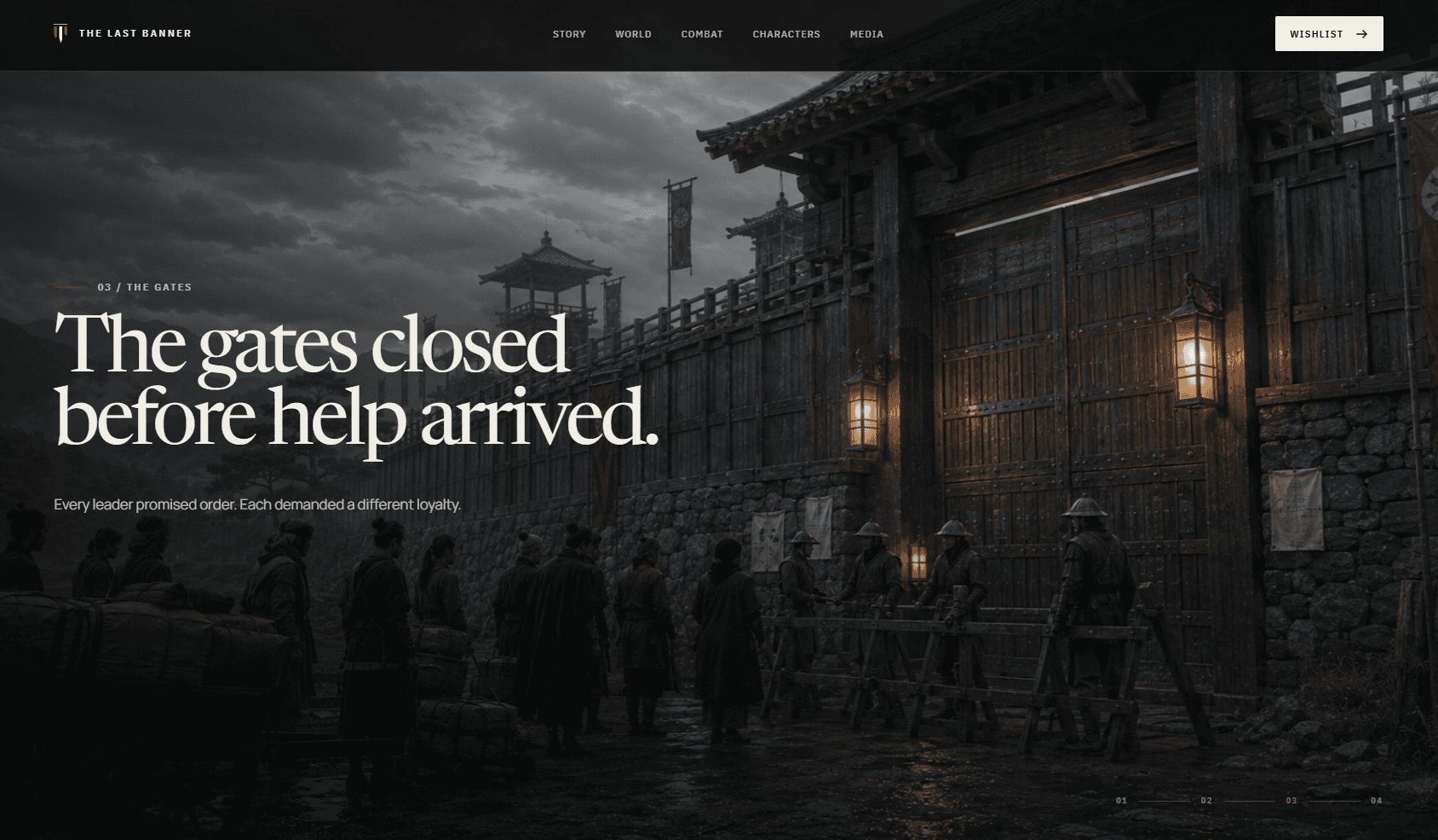

The story shaped the experience.
The page was structured as a journey through the province rather than a conventional sequence of marketing sections. Conflict leads into geography. Geography leads into approaches, characters, environments, and eventually the Duel.

EXPLORE
Six regions turn geography into part of the narrative.
CHOOSE
Blade, Shadow, and Strategist reveal three approaches through one interactive system.
MEET
Four characters share one interaction model while maintaining distinct identity and story.
WORLD + DUEL

One scene. Three moments of tension.
The Duel uses one continuous cinematic scene across three narrative beats. Instead of replacing the environment at every step, the scene remains in motion while the interpretation changes.
01 DISTANCE
02 TIMING
03 CONTROL
Responsive, not reduced.
The desktop experience relied on wide compositions, asymmetry, cinematic crops, and interactive layouts. Simply shrinking those designs would have broken the experience. Tablet and mobile were adapted around the intent of each section rather than treated as smaller copies of desktop.

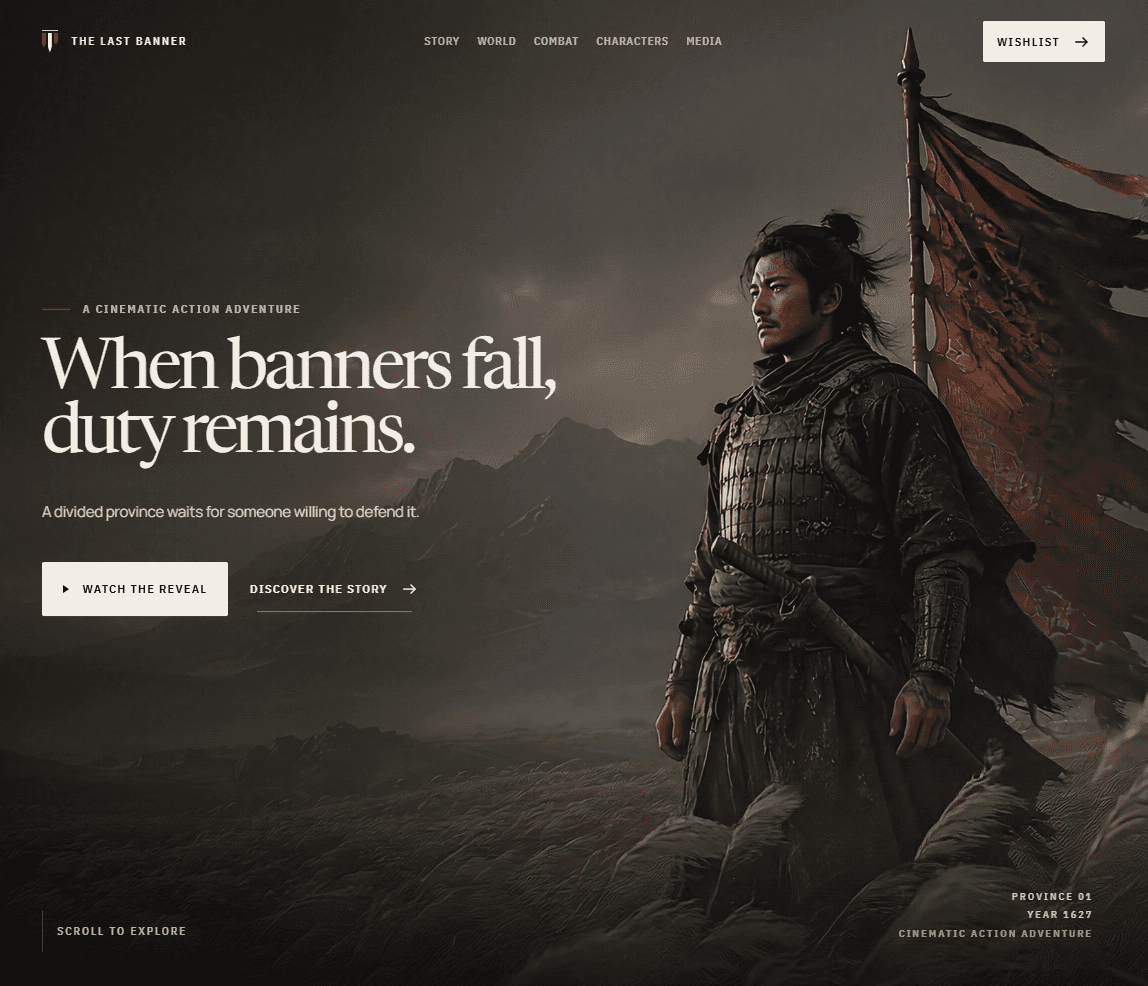

AI accelerated production. It didn?t replace direction.
AI was used to help produce characters, environments, video, and atmospheric material.
The real challenge was maintaining consistency: casting, composition, visual hierarchy, atmosphere, narrative continuity, and responsive behaviour.
Generation created options. Art direction decided what belonged.
REFERENCE / GENERATED SOURCE
FINAL WEBSITE IMPLEMENTATION
What the project proved.
The Last Banner began as a visual experiment and became an exercise in directing an entire digital experience. The finished result brings story, imagery, interaction, motion, responsive design, and AI-assisted production into one cohesive system.
Have a project that deserves more than a template?